Our laboratory integrates cutting-edge chemical technologies and digital tools to drive innovation and facilitate our data science/machine learning activities. By combining advanced instrumentation with comprehensive training, we prepare the next generation of researchers for careers in modern chemistry/chemical engineering and enabling technologies.
Hands-on experience with automation, high-throughput experimentation, and data-driven workflows equips our team with practical skills demanded by industry and academia. This integrated approach to research and mentorship ensures students gain proficiency in emerging technologies while contributing to groundbreaking scientific discoveries.
Our group has access to a range of industry-standard high-throughput experimentation (HTE) and automation equipment, including:
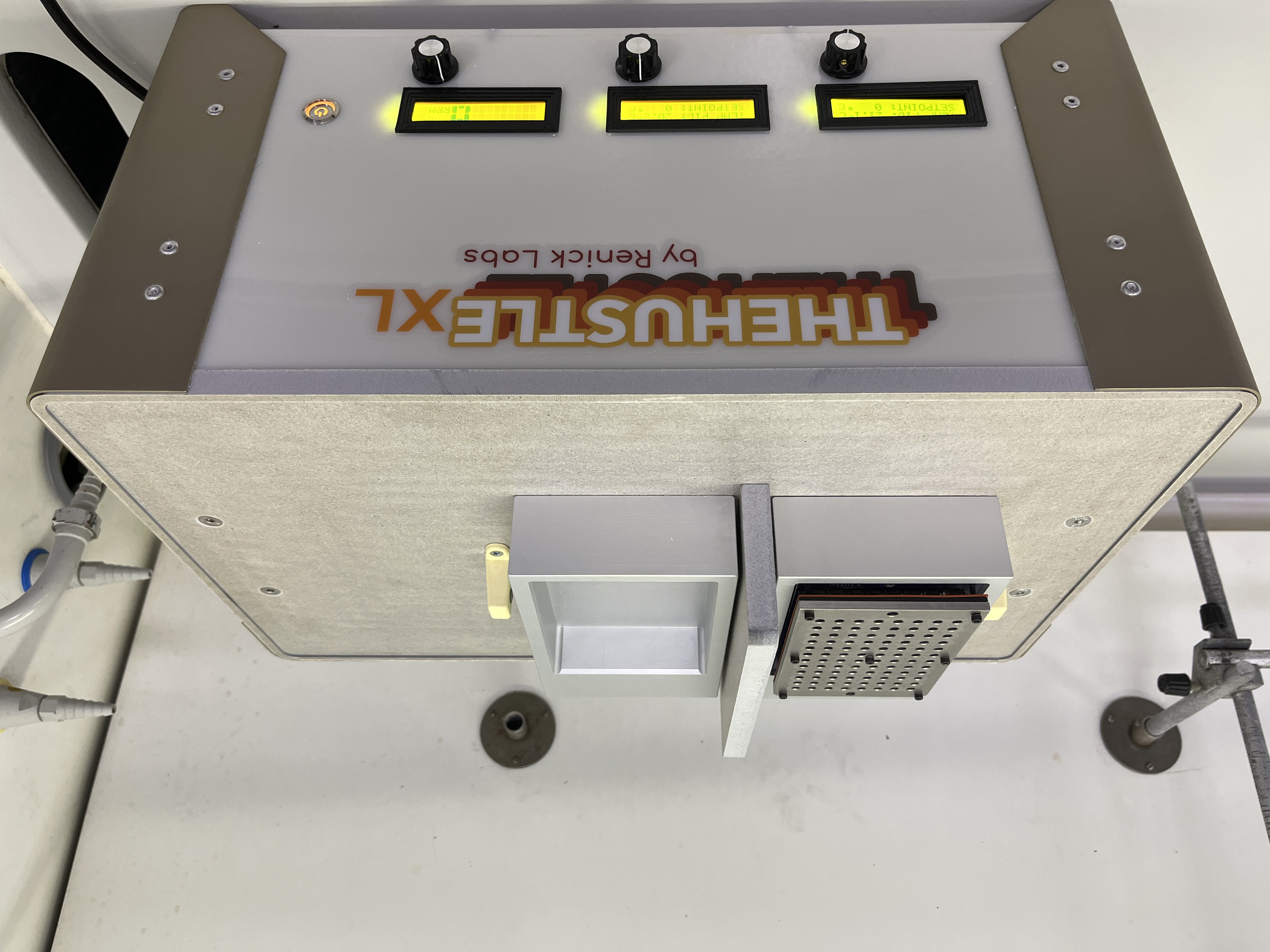
HTE plate heater and tumble stirrer
This equipment provides even heating and tumble stirring which are essential for consistent results in 96-well plates. Uniform temperature prevents well-to-well variability, while tumble stirring improves mixing, heat transfer, and mass transport. Together, they ensure reproducible and reliable high-throughput experiments.
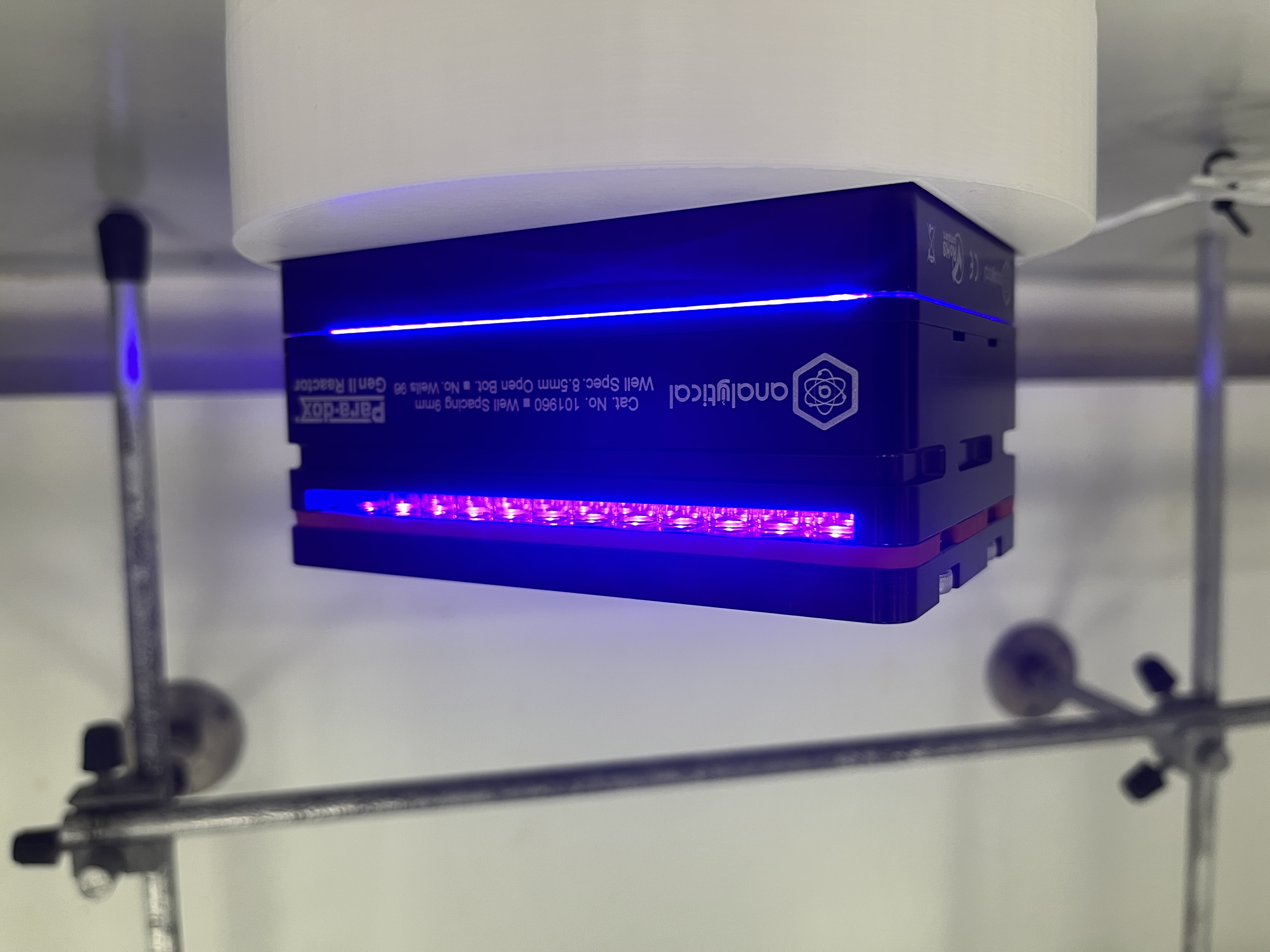
HTE LED arrays
HTE LED arrays (365 and 420 nm wavelengths) provide precise and uniform light irradiation for photochemical reactions in 96-well plates. They enable high-throughput screening of photochemical reactions with consistent light intensity and wavelength control, ensuring reproducible results across all wells.
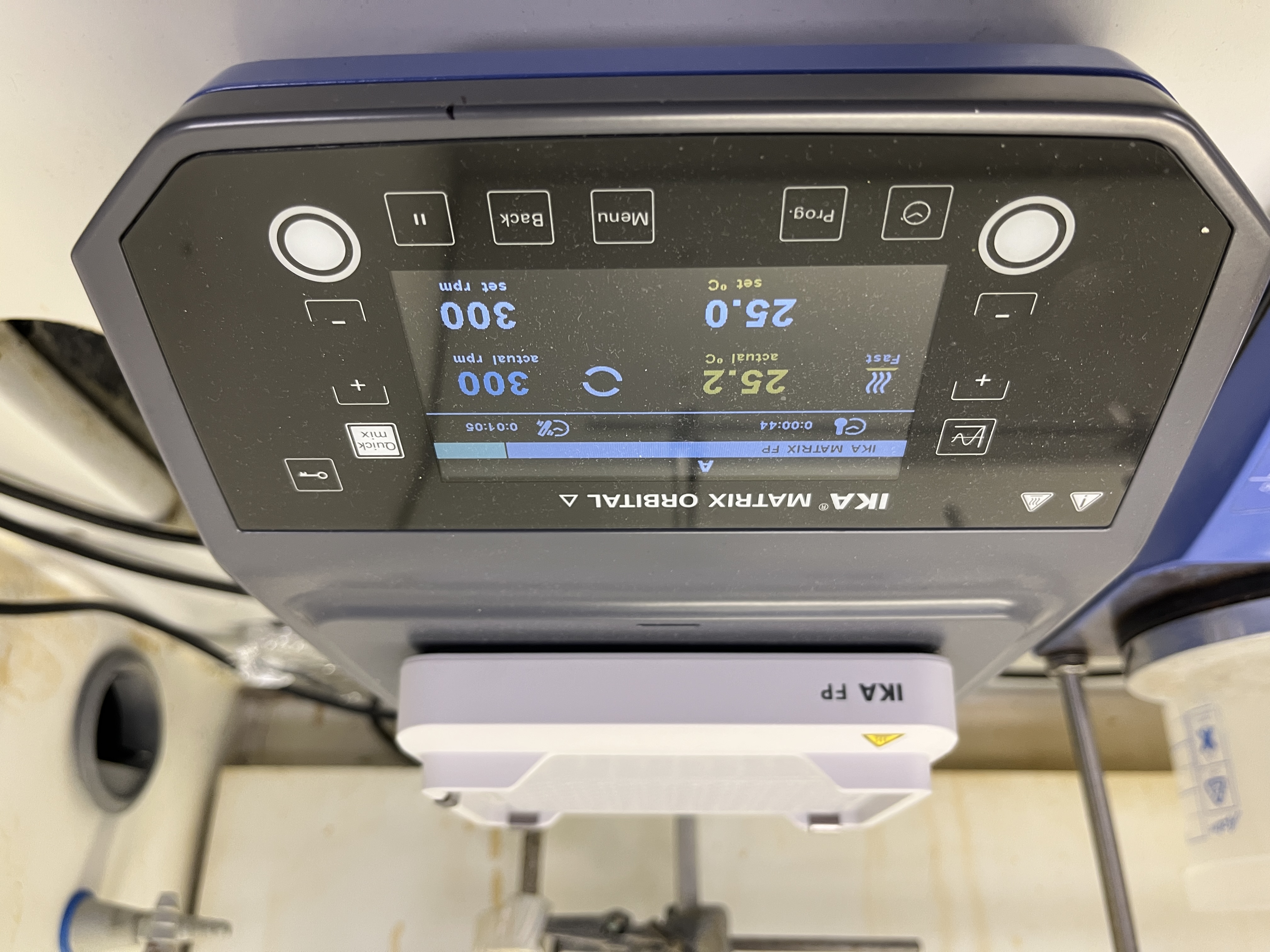
Orbital heater/shaker
The orbital heater/shaker provides controlled heating and agitation for various reactions, ensuring uniform temperature distribution and efficient mixing. The use is especially important for our reactions involving enzymes in 96-well plates.
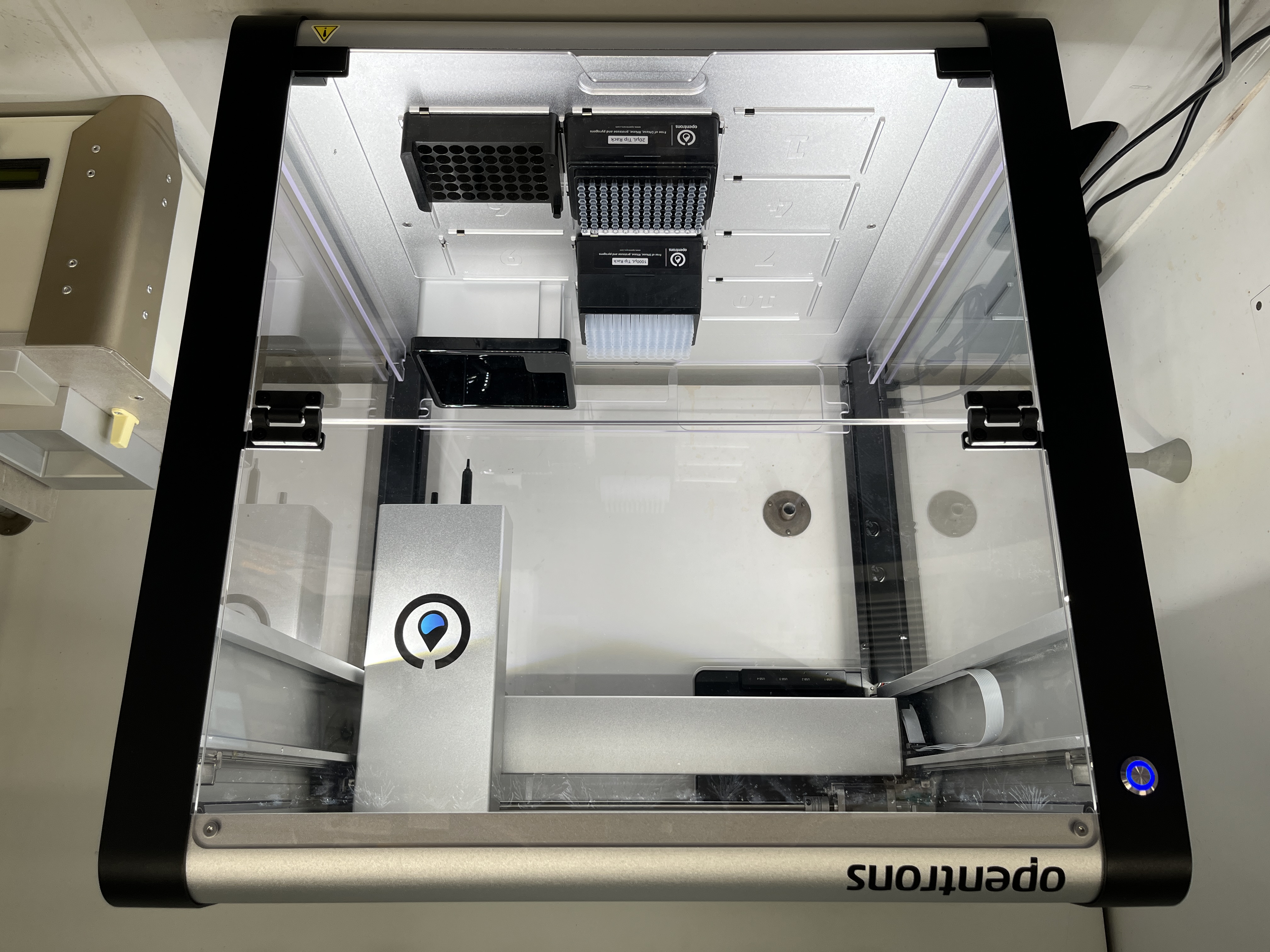
Opentrons OT-2 robot
The Opentrons OT-2 is an open-source liquid handling robot that automates pipetting tasks with high precision and reproducibility. It reduces manual error and enables scalable, high-throughput experiment, work-up or analysis workflows using standard labware.
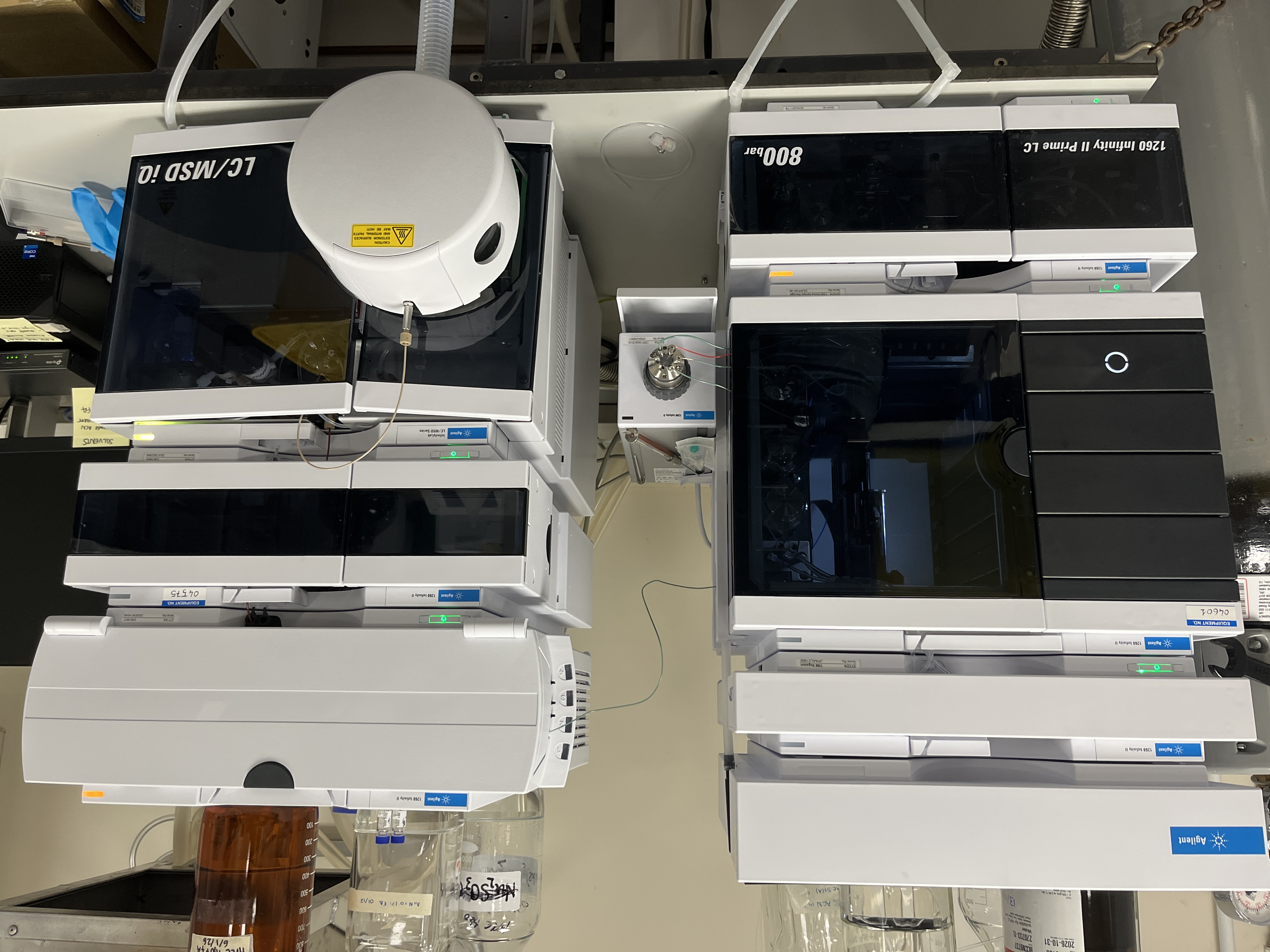
Agilent HPLC-MS
This system provides 96-well plate capability which enables high-throughput analysis of reaction arrays with minimal manual handling. Samples can be directly injected from plates, allowing rapid, consistent data aquistion across large datasets. This system also supports online reaction monitoring (in flow or batch), making it well suited to automated workflows and fast optimization cycles.
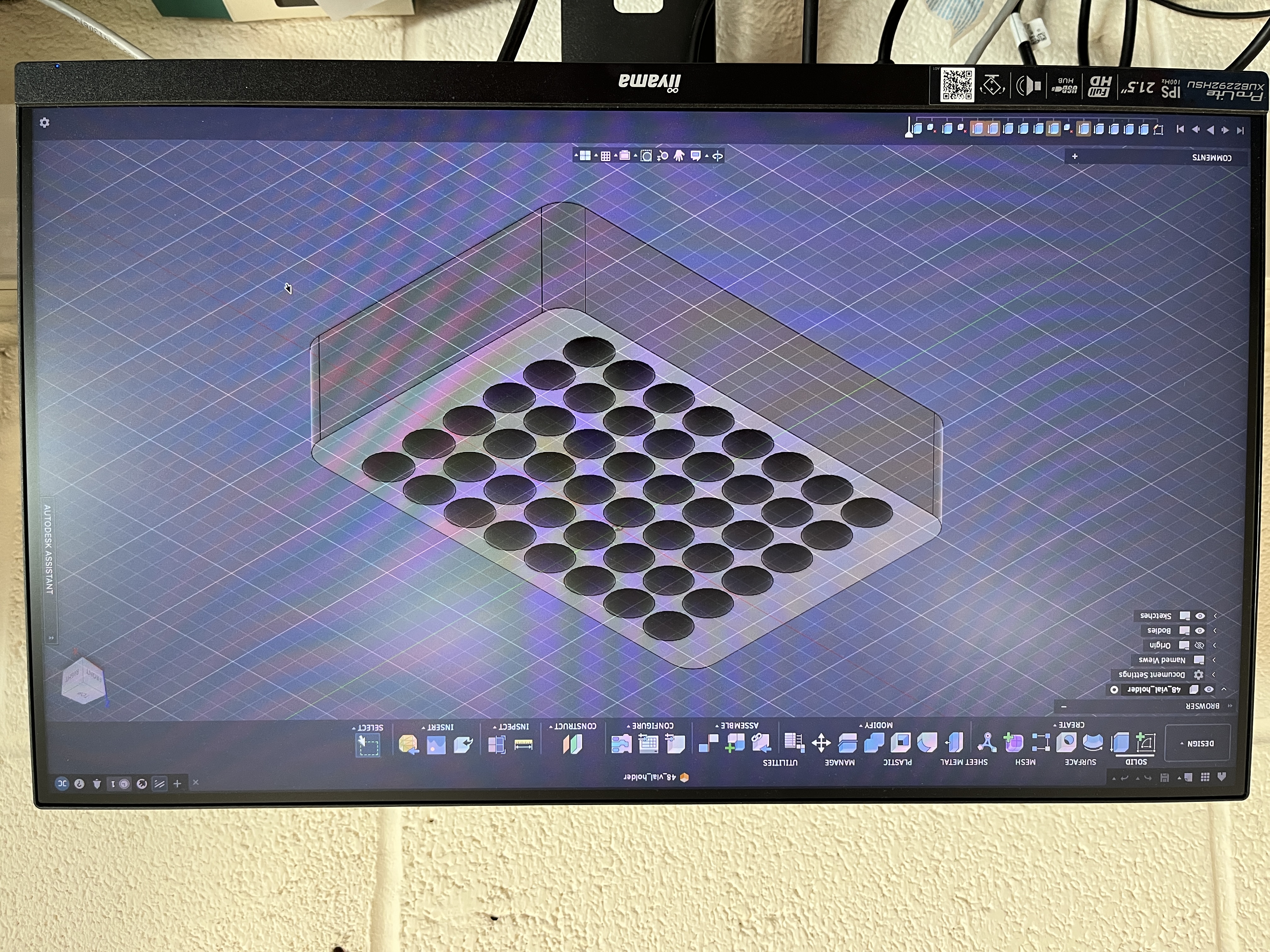
Custom HTE plate design and fabrication
Custom HTE systems and labware can be designed using CAD to precisely match experimental workflows and hardware constraints. These designs can then be rapidly prototyped via 3D printing or fabricated in on-site machine shops, enabling fast iteration and optimisation. This approach allows tailored solutions for specific reaction formats, improving integration, efficiency, and overall experimental performance.
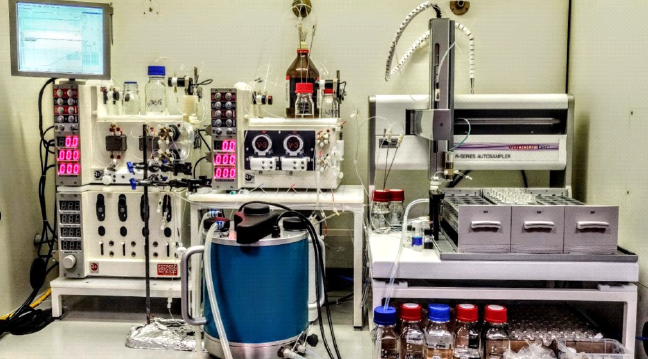
In addition to HTE and automation, our group leverages other modern enabling chemical technologies and digital tools to enhance our research capabilities.
Flow chemistry (Cresswell group)
In collaboration with Alex Cresswell's group, we employ flow chemistry techniques to conduct reactions in a continuous manner, allowing precise control over reaction conditions, improved safety, and enhanced scalability. Flow chemistry enables efficient heat and mass transfer, facilitating the development of novel synthetic methodologies and optimization of reaction parameters.
Electrochemistry
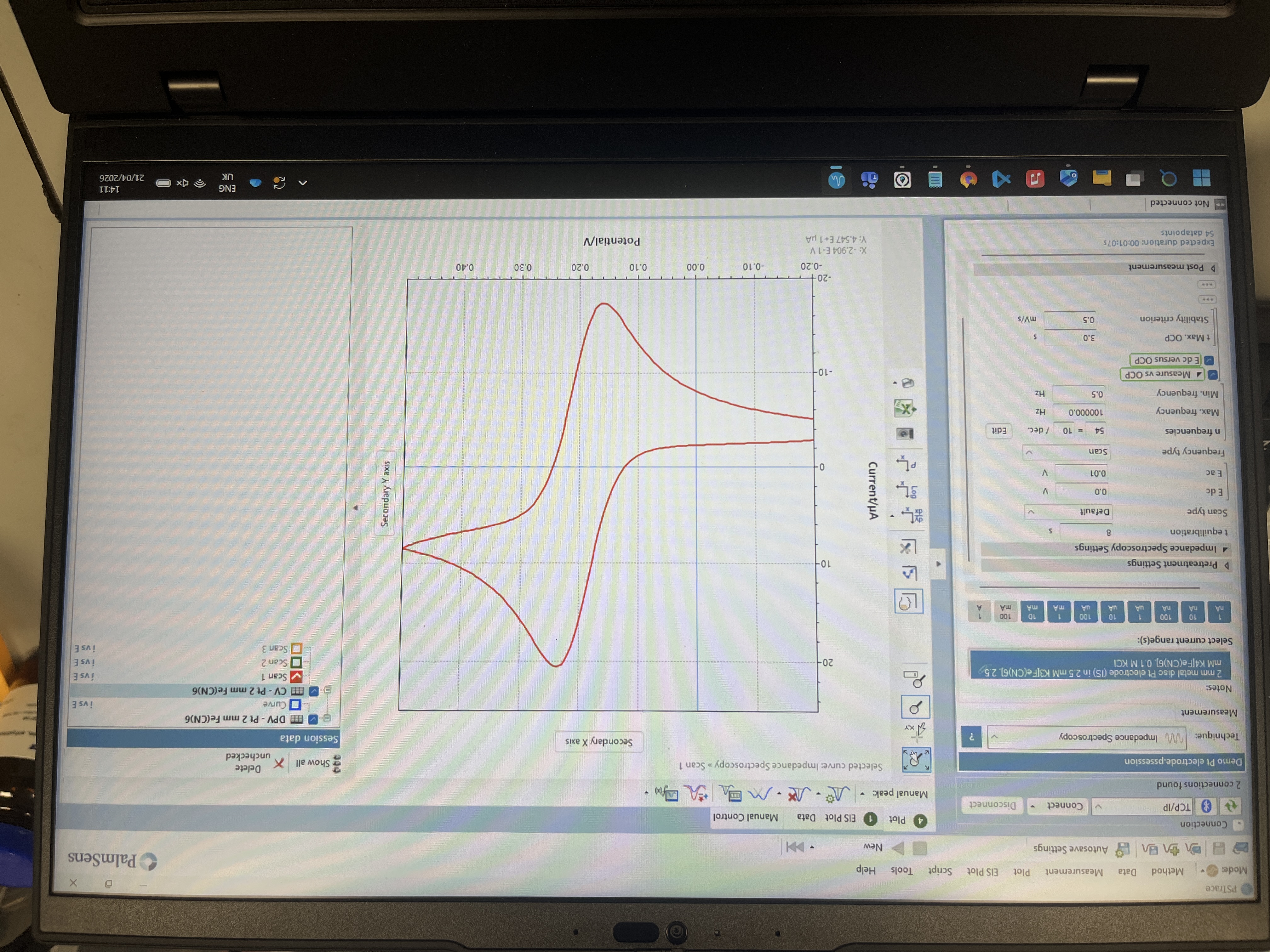
Our group utilizes electrochemical techniques to investigate reaction mechanisms, optimize reaction conditions, and develop new synthetic methodologies. Electrochemistry provides a powerful tool for studying redox processes and enabling sustainable chemical transformations.
Electronic lab notebooks
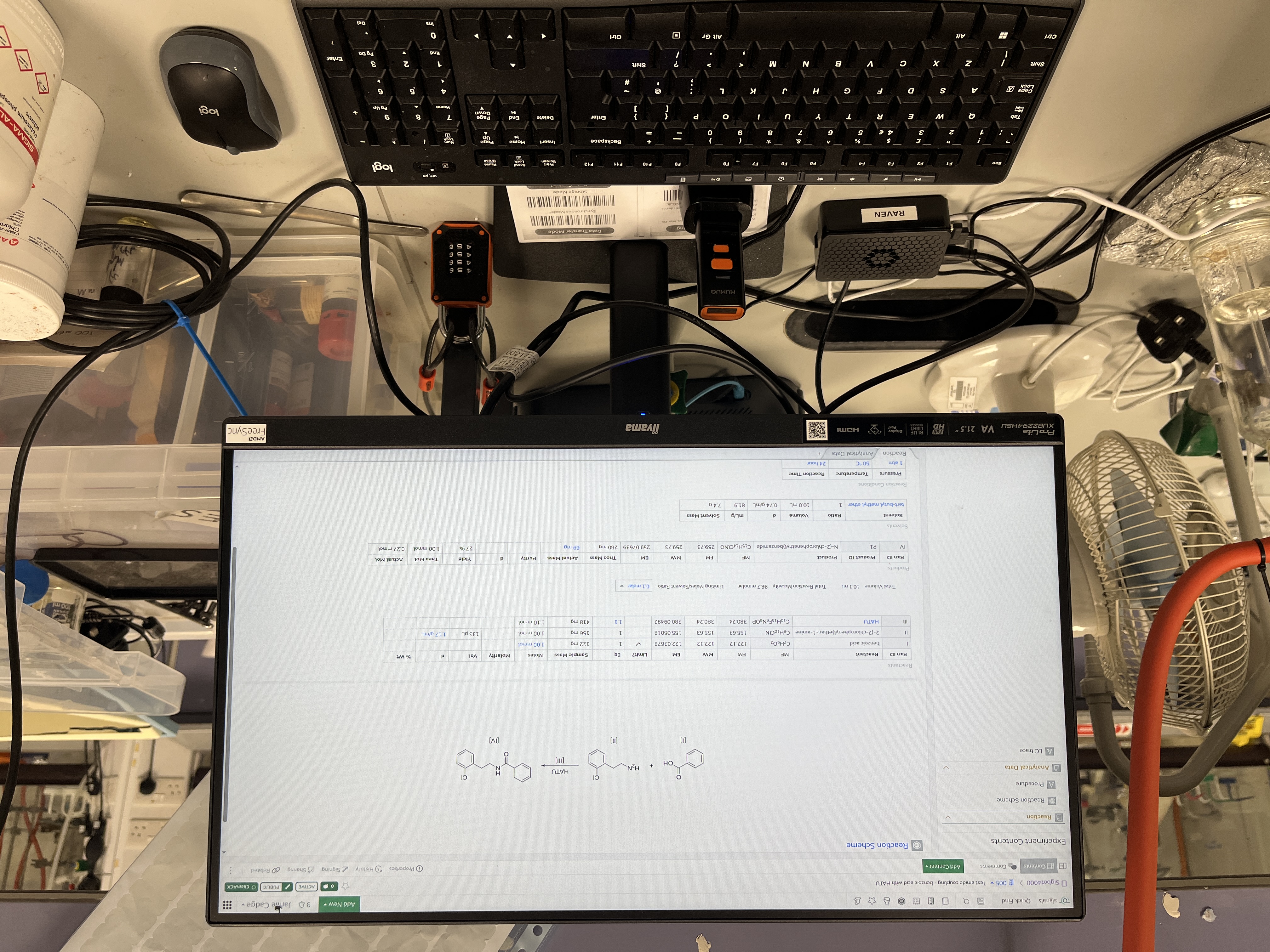
Our group utilizes electronic lab notebooks (ELNs) to streamline data management, enhance collaboration, and ensure reproducibility in our research. ELNs provide a digital platform for recording experimental procedures, observations, and results, facilitating efficient data sharing and analysis.
In addition to our in-house equipment, our group has access to a wide range of departmental and University facilities that support our research activities. These include:
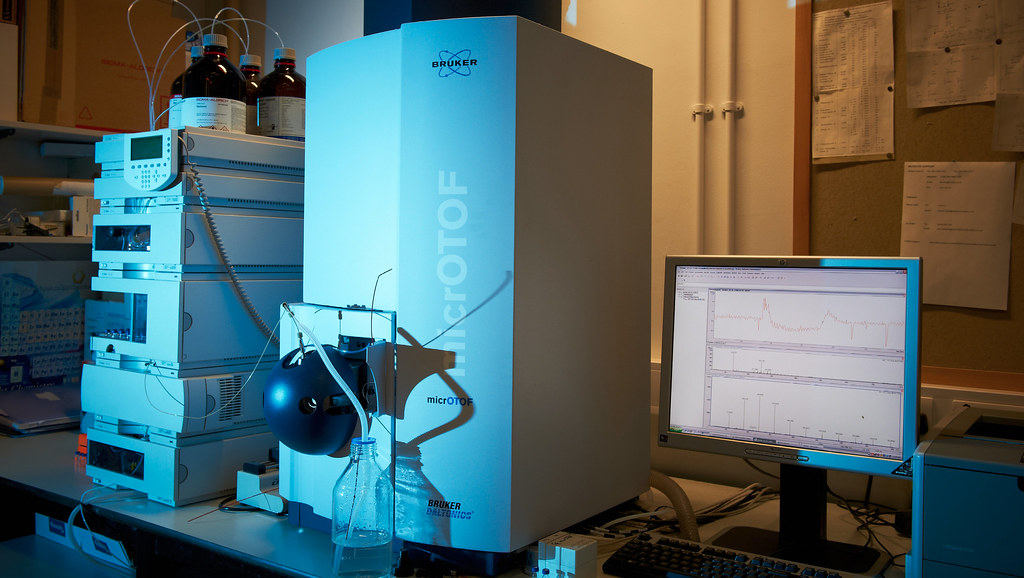
NMR and mass spectrometry
We have access to state-of-the-art NMR and mass spectrometry facilities, enabling detailed structural and analytical studies of chemical compounds. These facilities are part of the University's Chemical Characterization Facility, find out more here.
Dynamic Reaction Monitoring Facility
Bath's Dynamic Reaction Monitoring Facility (DReaM) provides advanced capabilities for real-time monitoring of chemical reactions, using a range of analytical techniques to gather detailed kinetic and mechanistic data. Find out more here.
X-ray diffraction
Our group has access to advanced X-ray diffraction facilities for detailed structural analysis of crystalline materials. These facilities are part of the University's Physical Structure Characterization Facility, find out more here.
High-performance computing resources
Our group has access to high-performance computing facilities and computational resources for molecular modeling, machine learning, and data analysis. This includes two clusters Anatra and Nimbus, both containing CPU and GPU nodes, and Bath also has access to Isambard 3 as part of the GW4 Alliance.